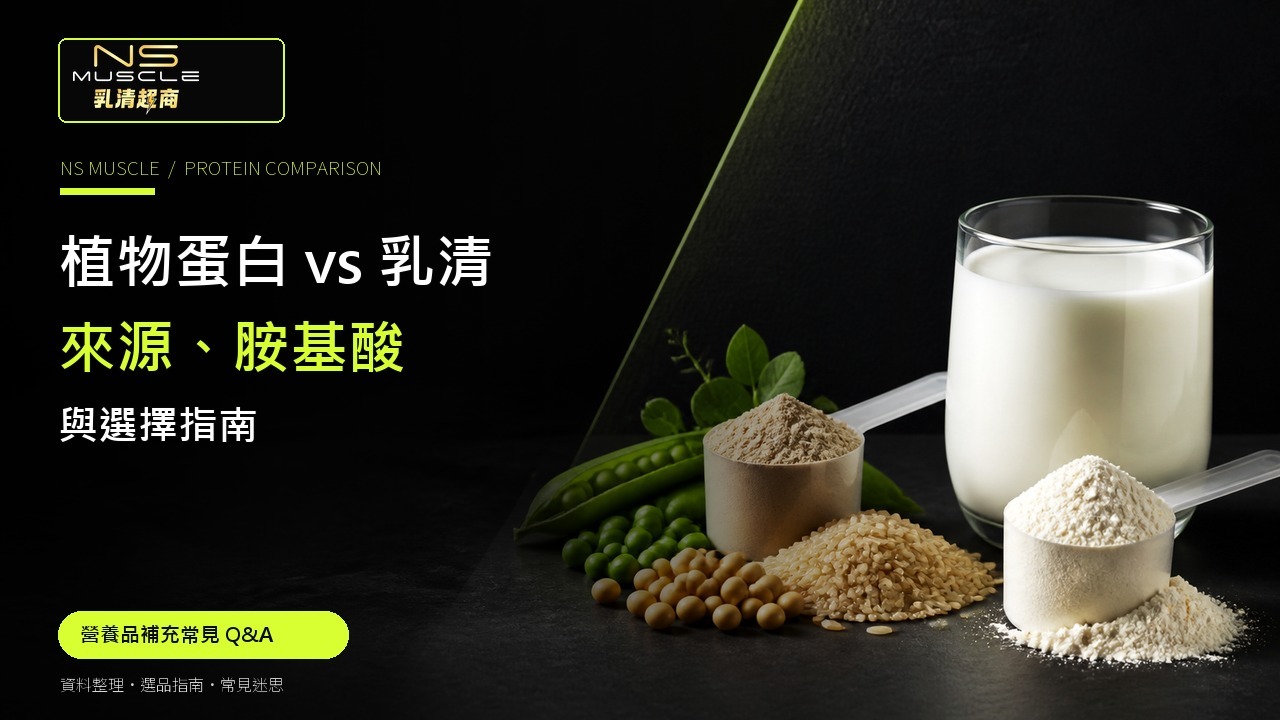
Quick answer: There is no single winner between plant protein and whey. Whey typically provides all essential amino acids, is relatively rich in leucine and mixes easily. Plant protein can be a better fit for vegan diets, people avoiding dairy or anyone who simply prefers plant-based sources. What matters most is getting enough protein across the day, choosing sources that suit your needs and using them consistently alongside appropriate training.
30-second summary
- Whey comes from milk; common plant proteins include soy, pea and rice.
- Soy is a complete plant protein. Pea and rice are often combined for a more complementary amino acid profile.
- Plant protein may suit vegan diets or people with a milk protein allergy, but other allergens still need to be checked.
- Do not judge a powder by scoop weight alone—compare protein per serving and the full ingredient list.
Plant protein vs whey: what is the difference?
| Comparison | Whey protein | Plant protein |
|---|---|---|
| Source | Whey from milk | Plants such as soy, peas, rice or oats |
| Essential amino acids | Typically complete and relatively rich in leucine | Varies by source; an individual source may be relatively low in one or more amino acids |
| Dietary fit | Not vegan; people with a milk protein allergy should avoid it | Can be vegan, but soy, pea and other allergens—as well as processing statements—still need to be checked |
| Taste and texture | Often creamy, with a familiar dairy taste | May taste earthy or grain-like and can be thicker; products vary widely |
| What to compare | Lactose tolerance, protein concentration, taste and price | Protein source, blend composition, protein per serving and taste |
Soy, pea or rice protein: how do they compare?
Soy protein: a well-studied complete plant protein
Soy provides all nine essential amino acids and is one of the more extensively studied plant proteins in sports nutrition. It can fit a vegan diet, but soy is also a common allergen, so check the product label carefully.
Pea protein: common in dairy-free formulas
Pea protein is relatively rich in lysine but may be lower in sulfur-containing amino acids. It is used both on its own and as the base of many plant-protein blends. Texture can be thicker, with noticeable differences between processing methods and formulas.
Rice protein: often paired with pea
Rice protein is relatively low in lysine, while its amino acid profile can complement pea protein. This is why pea-and-rice blends are common. A longer ingredient list does not automatically make a product better—actual proportions, protein per serving and the rest of your diet still matter.
Can plant protein support muscle growth?
Plant protein can contribute to a diet that supports training, but no protein powder replaces resistance training. Results are also influenced by total daily protein, essential amino acid intake, total energy intake, the training stimulus, sleep and consistency.
Digestibility and amino acid profiles differ among plant sources. Compare protein per serving, ingredient order, whether the product uses a single source or a blend, and whether the brand provides amino acid information you can verify. Do not rely on a “plant-based” claim on the front of the pack alone.
Choose the right protein in four steps
- Rule out unsuitable sources: A vegan diet excludes whey. Anyone with an allergy to milk, soy or another food should avoid the relevant ingredient and review allergen information carefully.
- Estimate your daily protein gap: Count the protein in foods such as legumes, soy foods, fish, eggs, meat and dairy first. Use powder only to fill what is missing.
- Compare protein that actually reaches your serving: Check serving weight, grams of protein, calories, ingredient order and servings per container.
- Let tolerance guide the final choice: Start with a small serving or pack. Assess digestive comfort, taste and satiety before deciding whether it works for regular use.
Frequently asked questions
Q1: Is plant protein always inferior to whey?
No. Whey typically has advantages in digestibility, essential amino acid content and leucine concentration. However, when total daily protein is adequate, the plant formula provides a suitable amino acid profile and training is comparable, plant protein can also support training adaptations.
Q2: Is plant protein always easier to digest?
No. Some people do not tolerate lactose or certain dairy products, while others react to legumes, thickeners or concentrated plant powders. Digestive comfort is individual and cannot be predicted from “plant” or “animal” alone.
Q3: Is lactose intolerance the same as milk protein allergy?
No. Lactose intolerance involves difficulty digesting lactose; milk protein allergy is an immune reaction. Lower-lactose WPI still contains milk protein and should not be treated as a do-it-yourself alternative for milk protein allergy.
Q4: Is every plant protein powder dairy-free?
Its primary protein may come from plants, but flavorings, other ingredients or shared manufacturing lines may still involve milk. People following a vegan diet or managing a serious allergy should review the complete ingredient list, allergen statement and reliable certification where relevant.
Q5: Does everyone on a vegan diet need protein powder?
No. A varied diet that includes enough legumes, soy foods, whole grains, nuts and seeds may meet protein needs without a supplement. Protein powder is simply a convenient option when appetite, schedule or food access makes the target difficult to reach.
Choose the right source first, then compare flavors
If you eat vegan, avoid dairy or want to try a different protein source, compare plant-protein labels by source, ingredients and protein per serving.
Prepared by: NS MUSCLE|Last updated: September 2, 2026
This article provides general sports nutrition information and does not replace individualized advice from a physician, registered dietitian or other qualified healthcare professional.
Related reading
- How to Choose Whey Protein: WPC, WPI and WPH Explained
- How Much Protein Do You Need? Body-Weight Calculations and Meal Distribution


