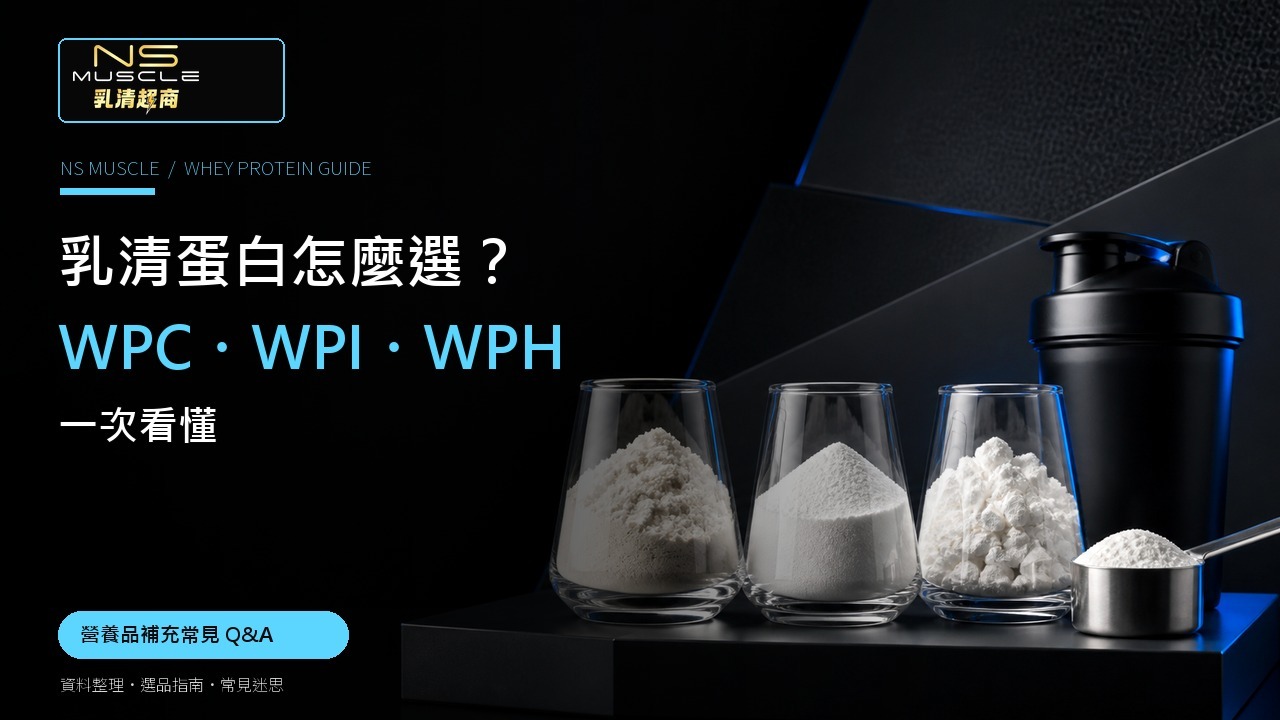
Quick answer: WPC, WPI and WPH are all made from whey. The main differences are how they are processed, their protein concentration, typical lactose and fat content, taste and price. WPC is often a practical everyday choice; WPI may suit people who want less lactose and fewer non-protein components; WPH contains partially hydrolyzed protein, but more processing does not automatically mean better training results for everyone.
30-second summary
- Work out how much protein you still need for the day before choosing a powder.
- WPI is typically lower in lactose, but it is not necessarily lactose-free.
- Lactose intolerance and milk protein allergy are different. Whey is not a do-it-yourself substitute for anyone with a milk protein allergy.
- Compare protein per serving, ingredients, calories and servings per container—not just the price of the tub.
What are WPC, WPI and WPH?
| Comparison | WPC Whey protein concentrate | WPI Whey protein isolate | WPH Whey protein hydrolysate |
|---|---|---|---|
| How it is made | Concentrated whey that retains more of whey’s other components | Further filtered to remove more non-protein components | Some of the protein is broken into smaller peptides |
| Lactose and fat | Typically higher than WPI | Typically lower, but not always zero | Depends on the starting material and complete formula |
| Taste and texture | Often creamier, with a more noticeable dairy taste | Often lighter, although products vary widely | May taste bitter when extensively hydrolyzed |
| What to prioritize | Budget, taste and everyday use | Lactose tolerance and protein concentration | The full formula, taste, tolerance and budget |
These are common tendencies, not fixed specifications for every product. Flavored powders may also contain cocoa, flavorings, sweeteners, creamers or thickeners. Always check the finished product’s nutrition label, ingredient list and allergen statement.
How to choose whey protein in four steps
1. Start with your daily protein gap
Whey is a convenient way to fill a protein gap, not a requirement for everyone. Estimate how much protein you already get from meals—such as meat, fish, eggs, dairy and legumes—then use a supplement only for the amount you still need.
2. Check protein per serving, not just scoop size
Scoop sizes and serving weights vary by brand. Compare the total serving weight, grams of protein, calories, ingredient list and number of servings together to understand the product’s actual protein concentration.
3. Filter by digestive comfort and lactose tolerance
If milk tends to cause bloating or diarrhea, compare lower-lactose WPI options, start with a small pack or serving, and check whether milk powder or creamer has been added. WPI still comes from milk and is not automatically lactose-free.
4. Then compare taste, mixability and value
A product you enjoy, tolerate and can afford consistently is usually more useful than the option with the most technical name. For a fairer value comparison, look at how much total protein the package provides rather than comparing tub prices alone.
Lactose intolerance is not the same as milk protein allergy
Lactose intolerance involves difficulty digesting lactose. Symptoms can vary with the amount consumed and a person’s tolerance, so some people may find a lower-lactose WPI easier to manage. Milk protein allergy is an immune reaction. WPC, WPI and sports-oriented WPH products are all still milk-derived; do not assume that an isolate or hydrolysate is safe. Anyone with a known or suspected allergy should seek guidance from a qualified healthcare professional.
Frequently asked questions
Q1: Is WPI always better than WPC for building muscle?
No. Long-term results depend more on total daily protein, an appropriate training stimulus, overall energy intake, sleep and consistency. If either product helps you meet your needs, WPI’s higher protein concentration does not guarantee greater gains.
Q2: WPH is absorbed faster, so is it always the best choice?
Hydrolysis breaks some protein into smaller peptides, but “faster” alone does not prove better long-term muscle or strength outcomes for every person. Taste, the complete formula, tolerance and cost still matter.
Q3: Is WPI the only option for lactose intolerance?
Not necessarily. Tolerance can depend on a product’s lactose content, serving size and the rest of your diet that day. If even small amounts of dairy consistently cause symptoms, compare non-dairy protein options and consider professional assessment.
Q4: Do women and men need different whey protein?
Usually not. It is more useful to choose based on your protein gap, allergens, preferred taste, calorie needs and budget than on a gendered product name.
Q5: Can a whey shake replace a complete meal?
Standard whey powder mainly provides protein. It may not supply the carbohydrates, fats, fiber and micronutrients expected from a balanced meal, so it should not automatically be treated as a complete meal replacement.
There is no universal “best”—only a better fit
Start with protein per serving, lactose tolerance and budget. Then use a smaller pack to check taste and digestive comfort before committing to a larger size.
Prepared by: NS MUSCLE|Last updated: September 2, 2026
This article provides general sports nutrition information and does not replace individualized advice from a physician, registered dietitian or other qualified healthcare professional.
Related reading
- Plant Protein vs Whey: Sources, Amino Acids and How to Choose
- How Much Protein Do You Need? Body-Weight Calculations and Meal Distribution


